Peltier is defined as a thermoelectric system that allows us to convert between heat energy and electrical energy. The thermoelectric phenomenon can be explained through Joule's law, the Seebeck effect, the Peltier effect and the Thomson effect. A thermoelectric module is made up of thermoelement materials consisting of P-type and N-type semiconductors.
The Peltier system is a thermoelectric system. A thermoelectric system is the name given to systems that produce a conversion between heat energy and electrical energy. A thermoelectric module is made up of thermoelement materials formed from N-type and P-type semiconductors.

This thermoelement system is connected in series electrically and in parallel thermally, which makes it possible to obtain thermoelectric modules of different capacities for different purposes. As a result, it is used in many places across the broad fields of Peltier heating and Peltier cooling.
When direct current is applied to both ends, the N-type and P-type elements push the electrons they hold from one end to the other. This produces heating on one face while cooling occurs on the other. This is the simplest answer to the question of how Peltier devices work. In this way, the thermoelectric module operates effectively as a heat pump.
At the same time, if a temperature difference is created between the two surfaces of the thermoelectric module, the module behaves just like a DC current source and generates electricity. By its very structure, however, when Peltier current is applied it functions as an element with one side heating and the other side cooling.
In electronic products that include cooling systems, turning to the Peltier system is the right choice. Peltier devices are frequently preferred because they have no mechanical moving parts, contain no flowing liquid and are light in weight.
In terms of use, they are more ecological than systems with equivalent characteristics, and because they contain no compressor they run more quietly. They also make installation easier. For this reason, Peltier devices have a wide range of applications.
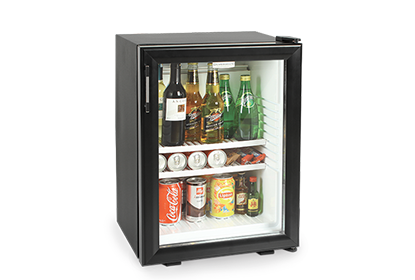
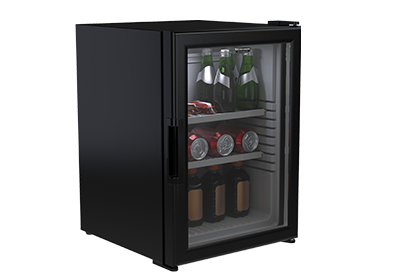
Peltier devices are classified according to their power. They are therefore chosen across very broad heating and cooling applications. They can be used in computer water cooling systems to lower the temperature of the water, in simple heater circuits and in vehicle refrigerators.
In terms of price and performance, it is known as the only system capable of the fastest cooling and heating. At the same time, by its very structure it can also generate electrical energy in exactly the reverse process. Energy is obtained when one surface is heated while the other is cooled. The best-known example of this is the decorative windmill placed on top of a radiator.
As a result of work carried out on semiconductors, the Peltier element widely used in the market today was discovered. The first step towards the Peltier invention was taken in 1823 by the Estonian scientist Thomas Johann Seebeck. Seebeck formed a loop using two different metals.
When he heated the junctions of this loop, he observed that a nearby compass needle was deflected. This discovery revealed that semiconductor materials create a magnetic field around them when exposed to heat.
Twelve years after Seebeck's observation, in 1835, the French scientist Jean Charles Athanase Peltier proved that the relationship between electricity and heat in semiconductors is a two-way relationship. Accordingly, when voltage is applied to the ends of semiconductors, one side cools while the other heats up.
As a result of this work, the electricity-heat relationship in semiconductors came to be known as the Peltier effect within the field of thermoelectrics, and took its place as an important building block in the literature. It retains that importance today.
Thanks to the thermoelectric material inside the Peltier element, heat on one surface is easily transferred to the other. The P-type and N-type ends inside the Peltier element are arranged in series. Once voltage is applied, electrons move in sequence from the cold side towards the hot side.
With the help of the electrons, heat is carried from the cold side to the hot side. The hotter the hot face of the Peltier element becomes, the colder its cold face will be. Therefore, as its operating output increases, so does the temperature difference.
By its very structure, a Peltier element has one side cooling while the other heats up. However, in situations where you want to heat one side but cannot cool the other side properly, an unintended exchange of heat will occur within the system.
In this case the Peltier element will move towards generating a counter current. As a result, the Peltier element will fail and stop working. The semiconductor inside the Peltier element also has a very delicate and fragile structure. If it takes any impact, this conductive structure fractures and the Peltier system never works again. Situations like these are what cause a Peltier element to fail.
The Peltier system has been used in many fields since the day it was invented. Combined with today's technology, however, it is chosen more often in applications where cooling and heating are both required on the same device. One of the reasons thermoelectric cooling systems are frequently chosen is that they are light in weight, have no mechanical moving parts and contain no flowing liquid.
These advantages are what make thermoelectric systems a preferred choice. They are also widely used because thermoelectric systems have a more ecological structure than systems using refrigerant gases. Because this system contains no compressor, it runs more quietly. Installation procedures are designed to be straightforward.
Today this system rarely presents problems other than incorrect use, and it is currently very widely used in cooling systems in particular. This means you can build a water cooling system for your own gaming computer and keep your reservoir permanently cold.
If you wish, you can also easily prevent unnecessary operation with a small safety component. Beyond this, it can also be chosen for energy generation. Alongside small experiments, you can take advantage of heat obtained from a solar source combined with a low air temperature.
Beyond this, it becomes possible to obtain energy from any system that creates a temperature difference and that you might think of. The important factor here is that the greater the temperature difference created between the two surfaces, the higher the resulting energy yield will be. Bearing this in mind, you can carry out experiments.